
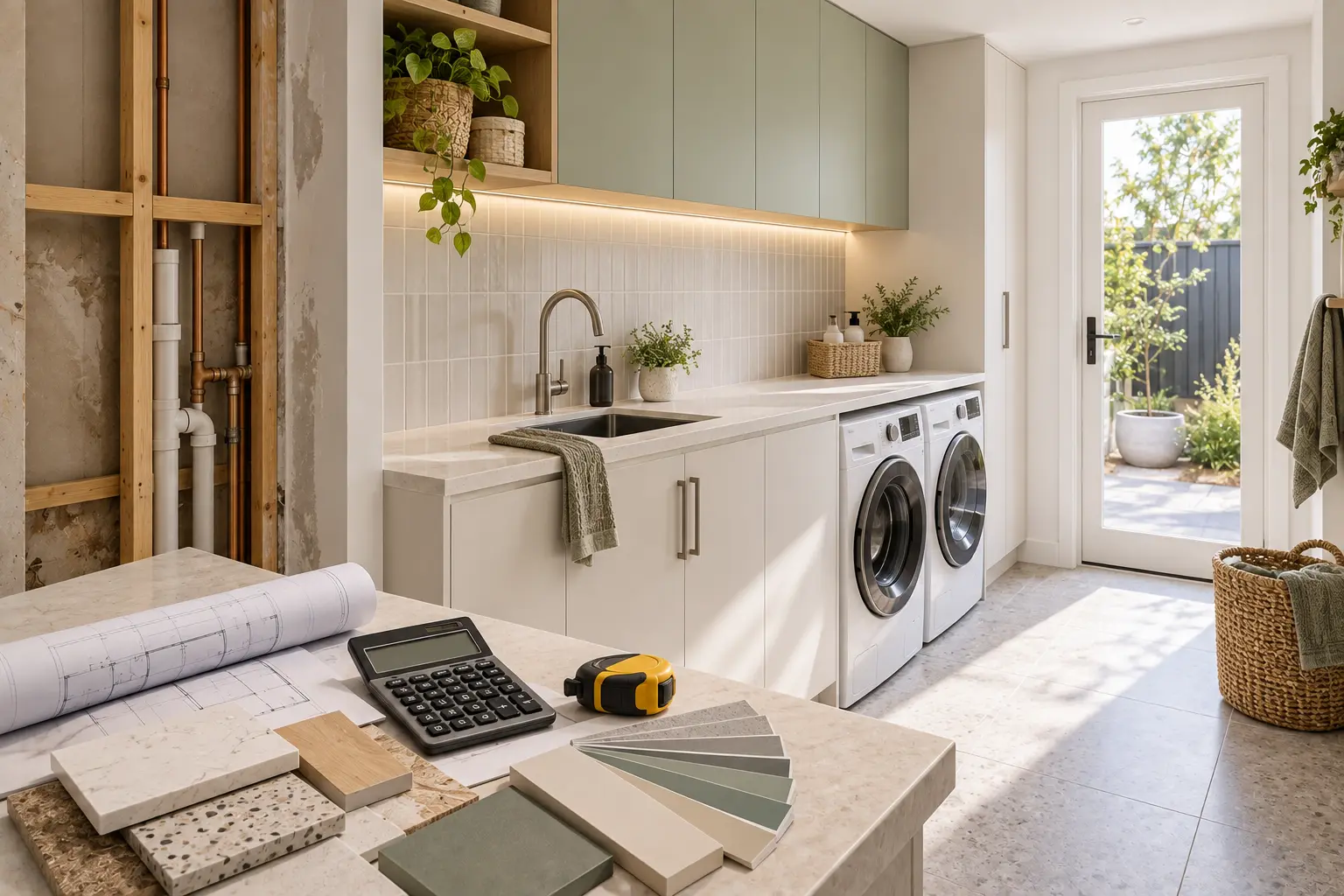
In Melbourne, a laundry renovation cost typically sits between $10,000 and $25,000, with premium builds going beyond $25,000.
I’m Jake, and I’ve spent 15 years building and renovating homes across Melbourne. Laundries rarely get the design attention kitchens and bathrooms do, yet they carry more of your daily load than almost any other room. A poorly planned laundry means awkward storage, cramped bench space, and appliances that don’t quite fit. This guide breaks down exactly what drives your renovation cost, where permits come into play, and how to spend your budget where it counts. No generic national averages, just real pricing from jobs I’ve quoted and built across Melbourne.
Average Laundry Renovation Cost in Melbourne
Most homeowners I speak with want the breakdown behind that number, not just the range. Here’s exactly how those figures split by project scope, based on real jobs I’ve priced.
Basic laundry renovation: $10,000 to $15,000. This covers new cabinetry, a fresh coat of paint, updated tapware, and maybe a new benchtop. The pipes and room layout stay exactly where they are, so you’re paying for finishes, not framework.
Mid-range laundry renovation: $15,000 to $25,000. It’s the sweet spot most Melbourne homeowners choose. It usually includes custom cabinetry, new tiling, and small layout tweaks like moving a sink or adding bench space.
Higher-end laundry renovation: $25,000 and up. Think custom joinery, stone benchtops, and structural layout changes. If you’re knocking out a wall or relocating plumbing across the room, you’re in this bracket.
These figures reflect Melbourne labour and material rates. A tradie’s callout fee in Frankston isn’t the same as one in the inner east, and that difference shows up in your final invoice.
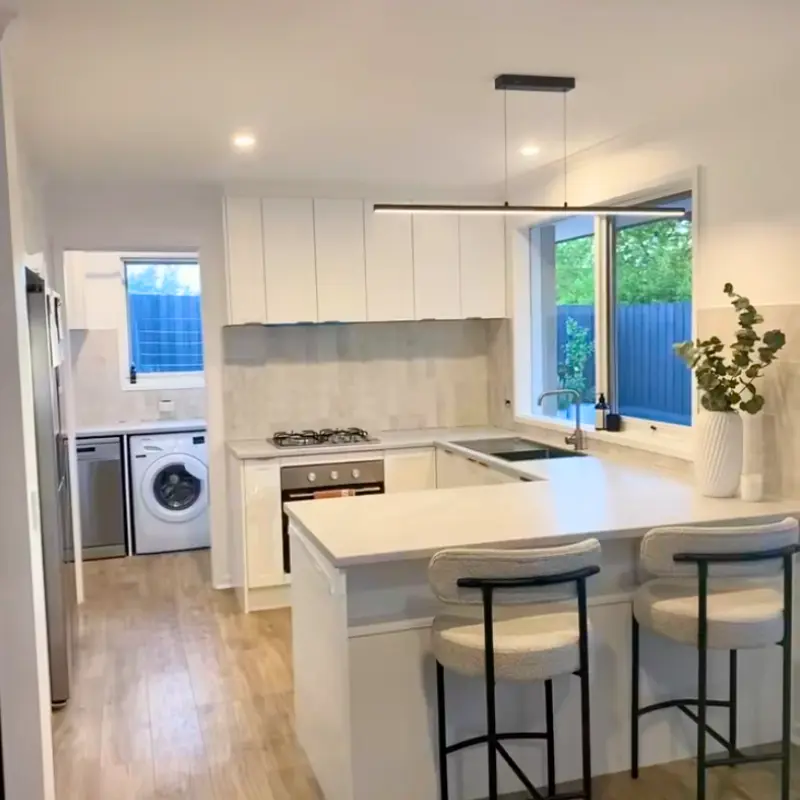
What Affects Your Laundry Renovation Cost
Every laundry job I quote comes down to a handful of variables. Once you understand these, you’ll know exactly where your money is going and where you can pull back.
Cosmetic vs Structural Changes
A cosmetic update means new cupboards, paint, and tapware without touching the pipes or wiring behind the walls. It’s the cheapest path. A structural renovation involves moving plumbing, shifting walls, or relocating power points, which pushes costs up fast because you’re paying licensed trades to do work that’s harder to access and slower to complete.
Size of the Laundry
A small laundry renovation cost naturally sits lower than a larger one, simply because there’s less cabinetry, flooring, and tiling to buy and install. That said, small spaces sometimes need cleverer joinery to fit everything in, which can offset some of the savings.
Cabinetry and Joinery Choice
Flat-pack cabinetry from a supplier will always beat custom joinery on price. Custom cabinets cost more, but they use every centimetre of space properly, which matters in a typical Melbourne laundry where square metres are tight.
Appliances
Washers, dryers, and combo units vary a lot in price depending on brand and capacity. Budgeting for appliances separately from your renovation costs helps you avoid nasty surprises when it’s time to fit everything into your new space.
Tiling and Waterproofing
Laundries are wet areas, and Australian Standards require proper waterproofing on floors and walls in these zones. Skipping this step isn’t an option if you want the job done properly, and it’s one area where I never let a client cut corners.
Do You Need a Permit for a Laundry Renovation in Melbourne?
This question comes up on almost every job, and the answer depends on what you’re changing. There are two separate approvals worth knowing about: a building permit and council planning approval. They’re not the same thing, and mixing them up trips people up more than any other part of a laundry reno.
A cosmetic refresh- new cabinets, paint, and updated tapware- generally doesn’t trigger either one. Structural work is a different story. If you’re moving plumbing, relocating electrical circuits, or knocking down a wall, you’ll usually need a building permit under the Building Act, along with licensed trades to sign off on the work. Planning approval only comes into play separately if your changes affect your home’s external structure or footprint, which is rare for a laundry-only job. The Building and Plumbing Commission regulates building and plumbing practitioners across Victoria and is the right place to check licensing and permit requirements before work starts.
Before any structural changes, I always recommend checking VicPlan to confirm what overlays or zoning conditions apply to your property. It only takes a few minutes and can save you a headache down the track if your council has specific requirements for wet area renovations.
Where Your Budget Goes
Clients are often surprised at how the money actually splits across a laundry job. Here’s the breakdown I work through with homeowners before we start.
Cabinetry and storage usually take the biggest slice of the budget. It’s the part of the room doing the most work, holding detergents, ironing boards, and everything else that needs a home.
Plumbing and appliance relocation costs more when you’re shifting the washing machine or sink to a new spot. Keeping fixtures where they are is the easiest way to control this line item.
Tiling and splashbacks add up quickly once you factor in floor tiles, wall tiles, and the labour to lay them properly in a wet area.
Lighting and power points are often underestimated. A laundry needs decent task lighting and enough power for appliances, and older homes sometimes need extra circuits added to handle the load.
Jake’s Tips to Renovate a Laundry on a Budget
I’ve built enough laundries to know where homeowners can save without cutting corners on quality.
Keep your plumbing and appliances in their current spots if you can. Moving a sink or washing machine sounds simple, but it means new pipework, which adds cost fast.
Choose semi-custom cabinetry over fully bespoke joinery. You still get a tailored look, but the price gap between flat-pack and full custom work is significant, and semi-custom often lands in the middle.
Sequence your trades properly. I always book plumbers and electricians back to back where possible, because separate callout fees on different days add up over a project.
Pick one feature to splurge on, whether that’s a stone benchtop or a statement tap, and keep the rest of the finishes simple. It gives the room a lift without blowing the budget.
Mistakes to Avoid in a Laundry Renovation
After years on site, I’ve seen the same mistakes trip up homeowners again and again.
Underestimating waterproofing costs. It’s not the exciting part of a laundry reno, but it protects your home from water damage for decades. Skimping here costs far more to fix later.
Skipping permits when they’re required. If your renovation involves structural or plumbing changes, doing it without approval can cause problems when you sell your home.
Poor storage planning. A laundry with beautiful cabinets but no logical workflow ends up frustrating to use every single day. Plan storage around how you actually do the washing, not just how it looks.
Does a Laundry Renovation Add Value to Your Melbourne Home?
A well-planned laundry renovation can make a genuine difference to how buyers view your home, particularly in family-focused suburbs where practical spaces matter as much as style. It won’t carry the same weight as a kitchen or bathroom upgrade, but a tired, cramped laundry can put buyers off just as easily as a dated kitchen. Keeping the finish consistent with the rest of your home is the safest way to protect your investment.
FAQs
How much does a small laundry renovation cost in Melbourne?
A small laundry renovation cost usually falls at the lower end of the basic tier, around $10,000, depending on how much cabinetry and tiling work is involved.
How long does a laundry renovation take?
A cosmetic update can take a week or two, while a structural renovation with plumbing changes usually takes several weeks once permits and trades are factored in.
Do I need a builder, or just a plumber and electrician?
For cosmetic updates, a plumber and electrician may be enough. For structural changes involving walls or layout shifts, a licensed builder should manage the project and coordinate trades.
What adds the most value to a laundry renovation?
Smart storage and good workflow add the most everyday value, while quality tiling and waterproofing protect the long-term condition of the room.
Ready to renovate your laundry? Get in touch with JBK Homes for a Melbourne-based quote built on real project experience, not guesswork.
