

Moving in Melbourne is expensive. Stamp duty, agent fees, and median house prices above $900,000 in most metro suburbs add up fast. So more Melbourne homeowners are choosing to stay put and renovate instead. Smart move. But here’s where many go wrong: they jump straight into choosing tiles and taps before sorting out the basics. A renovation without a clear plan is like building a house on sand. It looks fine at first, then cracks appear — literally.
This guide walks you through how to plan a home renovation in Melbourne the right way, from setting goals and budgeting to permits, timelines, and finding the right builder. At JBK Homes, we’ve been helping Melbourne homeowners renovate for 15 years. We’ve seen what works, what blows budgets, and what sends projects sideways. Here’s what you need to know about step-by-step.
Step 1: Define What You Actually Want
Before calling a single builder, get clear on your renovation goals.
Are you doing a cosmetic renovation — fresh paint, new flooring, updated fixtures? Or a structural renovation — knocking down walls, adding a room, or extending out the back? These are very different in scope, cost, and complexity.
Ask yourself:
- Am I renovating for my lifestyle, or to increase home resale value?
- Do I need more space, better flow, or just a fresher look?
- Is energy efficiency a priority — better insulation, double glazing, solar?
In 2026, the most popular renovation goals for Melbourne homeowners include open-plan living, home office spaces, and seamless indoor-outdoor flow. These trends reflect how people actually live now.
Practical tip: Write two lists — your wish list and your must-have list. When the budget gets tight (and it usually does), you’ll know what to protect.
Step 2: Set a Realistic Budget
Budget conversations are uncomfortable. But getting this wrong is worse.
Here are realistic Melbourne renovation cost benchmarks for 2026:
| Renovation Type | Cost Per m² |
|---|---|
| Cosmetic (paint, flooring, fixtures) | $800 – $1,200 |
| Mid-range (layout changes, quality finishes) | $1,500 – $2,500 |
| Premium / structural (extensions, full rebuild) | $3,000+ |
Your total budget needs to cover more than just the build. Break it down like this:
- Builder and trades: The biggest slice — roughly 60–65% of your total
- Materials and fixtures: Ranges widely depending on your choices
- Permits and compliance: Often forgotten, but real costs — more on this below
- Contingency buffer: Set aside at least 15% for the unexpected
That 15% buffer isn’t pessimism — it’s experience. Melbourne’s older homes, especially pre-1990 properties, regularly throw up surprises mid-build. We’ll get to that shortly.
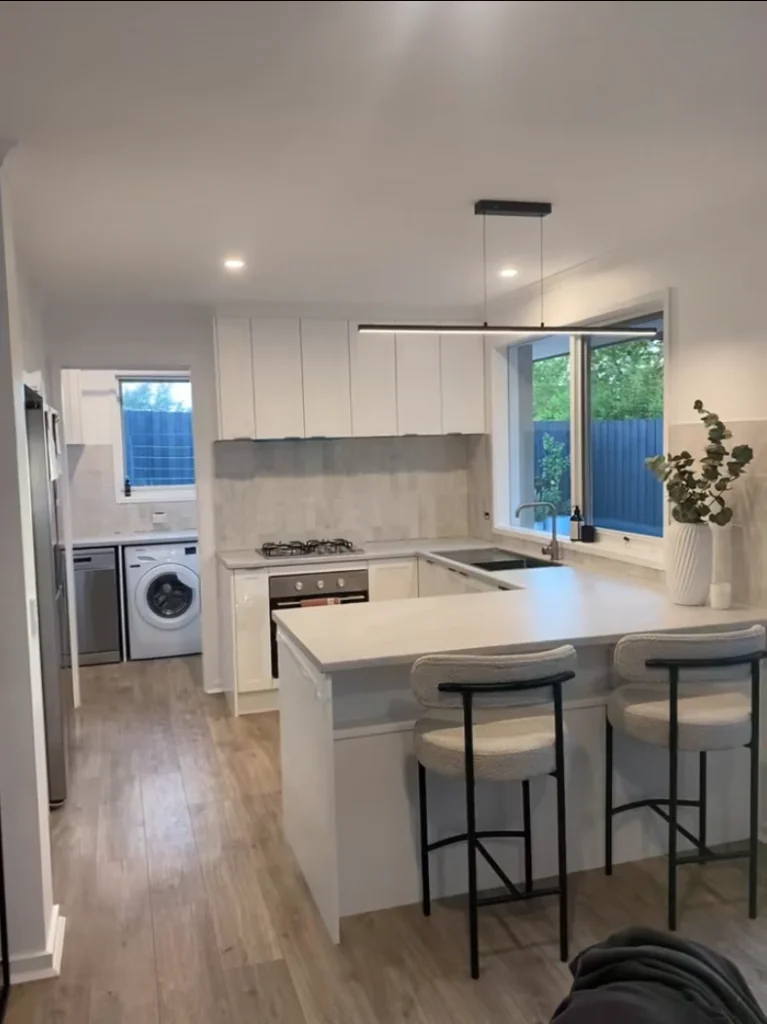
One more thing worth knowing: kitchen and bathroom renovations typically return 70–90% of their cost in added property value in Melbourne’s market. If you’re renovating to sell, start there.
Step 3: Understand Melbourne’s Permits and Regulations
This is where many Melbourne homeowners get caught out. Skipping this step or leaving it too late can halt your project entirely.
Building Permit (Victoria): Most structural renovations in Victoria need a building permit, issued by a registered building surveyor. Think extensions, room additions, wall removals, or any work that changes your home’s structure. The Victorian Building Authority (VBA) oversees this process. You can check your builder’s licence registration directly on the VBA website.
Planning Permit: A planning permit is separate from a building permit. You may need one if:
- Your property sits within a heritage overlay (common in Inner suburbs like Fitzroy, Richmond, Collingwood, South Yarra, and Hawthorn)
- Your council zone has specific rules under the Melbourne Planning Scheme
- You’re building close to boundaries or above certain height limits
Heritage overlays are the most common planning surprise. They restrict changes to a home’s exterior — sometimes even the colour you can paint the front fence. Many homeowners discover this mid-project, which causes costly delays.
Owner-Builder vs Licensed Builder In Victoria, you can apply to be an owner-builder for projects over $16,000 — but it comes with serious personal liability. You take on full legal responsibility for the build. For most homeowners, working with a registered domestic builder is the safer path.
The single best thing you can do: Contact your local council before starting any design work. City of Melbourne, Boroondara, Stonnington, Yarra — they all have planning departments that can confirm your obligations in writing. Free advice that can save you thousands.
Step 4: Build a Realistic Timeline
A common renovation mistake is underestimating how long the planning phase takes — before a single tradie sets foot on site.
Here’s a realistic phase-by-phase timeline for a mid-size Melbourne renovation:
| Phase | Estimated Duration |
|---|---|
| Goal-setting and research | 1–2 weeks |
| Design and architectural plans | 3–4 weeks |
| Permit approvals (council) | 4–8 weeks |
| Builder tendering and selection | 2–3 weeks |
| Construction | 8–16 weeks |
| Final inspection and snagging | 1–2 weeks |
Total: roughly 5–8 months from decision to done. That’s for a standard mid-size project. Larger or more complex builds take longer.
Two Melbourne-specific factors will affect your timeline:
- Seasonal weather: Avoid scheduling external structural work in winter. Wet ground and rain delays are common, especially in Melbourne’s southern suburbs.
- Trade availability: December and January are notoriously hard months to lock in trades. Plan your build to avoid the holiday window.
Always add a 2–4 week buffer to your timeline. Projects that account for flexibility finish calmer.
Step 5: Choose the Right Renovation Builder
Your builder will make or break your renovation. This decision matters more than which benchtop you choose.
Here’s what to look for in a Melbourne renovation builder:
- VBA registration: Every domestic builder in Victoria must be registered with the Victorian Building Authority. Check their licence number on the VBA register before signing anything.
- Local suburb experience: A builder who’s worked in your suburb understands its quirks — heritage overlays, block sizes, soil types, council requirements.
- Fixed-price contract: A fixed-price contract protects you from cost blow-outs. Cost-plus contracts (where you pay actual costs plus a margin) can escalate quickly if not managed tightly.
- Itemised scope of work: A clear, detailed quote tells you exactly what’s included — and what’s not.
Red flags to walk away from:
- No written contract
- No VBA registration
- Pressure to start before permits are approved
- Vague quoting with no line items
Five questions to ask every builder you meet:
- Are you a registered domestic builder with the VBA?
- Do you manage permit applications on my behalf?
- Can you share references from recent projects in my suburb?
- What happens if unexpected issues come up during the build?
- What warranties do you provide on workmanship?
At JBK Homes, we’ve answered these questions for Melbourne homeowners across the metro and inner suburbs for 15 years. Transparent quoting, full VBA licensing, and clear contracts are the baseline — not the bonus.
Step 6: Prepare for What You Can’t See
Melbourne’s housing stock is full of character. It’s also full of surprises hiding behind the plasterboard.
Common hidden issues in older Melbourne homes:
- Asbestos: Very common in homes built before 1990. Requires licensed removal.
- Outdated wiring and plumbing: Often need upgrading to meet current building codes.
- Subfloor problems: Termite damage, rotting stumps, and poor drainage are typical in Melbourne’s older suburbs.
- Heritage discovery post-purchase: Some buyers don’t realise their property has a heritage overlay until they begin planning renovations.
Get a pre-renovation building inspection before you finalise your scope of work or sign a builder contract. It costs a few hundred dollars and can save you tens of thousands in budget surprises.
This is why the 15% contingency buffer exists. Not because your builder will mismanage the project — but because some things are genuinely unknowable until walls come down.
Helpful resource:- Home renovation statistics Australia 2026
Plan Your Melbourne Home Renovation the Right Way
Good planning separates a smooth renovation from a stressful one. Define your goals, set your budget with a real contingency, sort your permits early, and choose a licensed builder with local experience. Get the fundamentals right, and the rest of the process falls into place.
At JBK Homes, we’ve helped Melbourne homeowners plan and build with confidence for 15 years. Whether you’re updating a bathroom or extending a family home, we bring local knowledge, transparent pricing, and a process that keeps you informed at every step.
Ready to plan your renovation? Book a free consultation with JBK Homes today.
Frequently Asked Questions
Do I need a permit to renovate my home in Melbourne?
Most structural renovations require a building permit through the Victorian Building Authority. You may also need a planning permit if your property is in a heritage overlay or specific council zone. A quick call or email to your local council before design work begins can save you weeks of back-and-forth later.
How long does a Melbourne home renovation realistically take from start to finish?
A mid-size renovation typically takes 5–8 months from initial planning to completion, including 4–8 weeks for permit approvals alone.
How do I find a reliable renovation builder in Melbourne?
Verify their VBA domestic builder registration, ask for suburb-specific references, and insist on a fixed-price contract with an itemised scope of work before any work begins.
Which renovations add the most value to a Melbourne home?
Kitchen and bathroom renovations consistently deliver the strongest return on investment — typically 70–90% of renovation costs in added property value. Open-plan extensions and energy-efficient upgrades — think insulation, double glazing, and solar — aren’t far behind.
